• La Hacienda

    San Roque, Spain
  • Constance Lemuria

    Praslin, Seychelles
  • Yas Links

    Abu Dhabi
  • Lübker Golf & Spa Resort

    Nimtofte, Denmark
  • London Golf Club

    Kent, England
1
/
3
/

World Class Golf Venues

0World class golf venues
0Countries
0Continents

Welcome to European Tour Destinations – a Network of World Class Golf Venues which all have a close association with The European Tour group, one of the game’s foremost organisations.


Featured Destinations

  • Airport
    Helsinki, 100km
  • Golf Courses
    1 Golf Course (18 Holes)
  • Driving Range
    Practice Facilities, including driving range
  • Halfway House
    Clubhouse with saunas
  • Restaurants
    3 Restaurants
  • Hotel
    Vanajanlinna Hotel & Club Rooms
  • Conferences
    Conferences, Events & Weddings
  • Real Estate
    Real Estate
  • Airport
    Tallinn, 25km
  • Golf Courses
    2 Golf Courses (27 Holes)
  • Driving Range
    Driving Range & Golf Academy
  • Tees
    Short Game Area
  • Halfway House
    Clubhouse & Halfway House
  • Restaurants
    Restaurant
  • Spa
    Sauna
  • Event Facilities
    Conferences, Events & Weddings
  • Real Estate
    Real Estate
  • Golf Academy
    Proshop & Club Hire

European Tour Destinations News

Behind Le Golf National’s Renovation

30th June 2026
We caught up with the club’s General Manager, Philippe Pilato, to find out what’s happening ahead of the reopening on September 1st, 2026. In this video, Philippe explains the following points which he expands on below: The holes affected by the aptly-named Metro Line 18 The project’s biggest challenges The opportunities for improvement the works engendered Tell us about the work being carried out at Le Golf National: “After hosting the golf event at the Olympic Games and the French Open in 2024, we closed the Albatros course for a major renovation. This was due to a new construction project by the Greater Paris Metro to build a new line – Line 18. Like 18 holes, easy to remember! “It will connect Paris Orly Airport to Versailles, and we’ll have a station just 300 metres from reception, which will be a great opportunity for welcoming guests and hosting big events in the future. “The construction of this new Metro line meant we had to redesign hole 4, as it runs very close to Line 18. As a result, we also moved hole 5, and took the opportunity to make changes to hole 6 too, which we felt was actually the weakest on the course. It was short with no hazards – so we added bunkers and made it a drivable par 4 for big events, with the green oriented wider rather than longer. In fact, we added 17 bunkers across those three holes. “Although the major works were on holes 4, 5 and 6, we took the opportunity to tweak holes 1, 2 and 9, as well as holes 13 through 18. On holes 1, 2, 15 and 18, we replaced the timber walls around the greens, which also gave us the opportunity to redesign those four greens. “As sustainability is a key focus for us at Le Golf National, we decided to also make the change to bentgrass across the entire course. With summers getting hotter and droughts becoming more frequent, this type of grass will allow us to use less water, especially when restrictions are in place. “So, we embraced this project as an opportunity to proactively modernise the course, enhance our sustainability, and elevate the playing experience for both our customers and professional players.” How did you balance redesigning the course for the average golfer, whilst keeping it tough enough for professionals? “Balancing the requirements of a championship course suited to both professionals and the average golfer is a delicate exercise. If it’s too challenging or not challenging enough can leave customers dissatisfied and not wanting to return. “Le Golf National is a narrow golf course, which can prove challenging for the average golfer. With this in mind, we’ve introduced autonomous mowers to better control the length of the rough and make conditions more manageable for guests. Then, when we set up for professional tournaments, we can simply adjust the course accordingly. “We’ve also built new tee boxes on certain holes to make the round more enjoyable

The Architect’s Take: International Course Architect Russell Talley

30th June 2026
The project was necessitated by the construction of the new Paris Metro line – aptly named Line 18 – which connects Paris-Orly Airport with Versailles. We caught up with the man behind the transformation – course architect Russell Talley – to discuss the scale of the project, the importance of a strong design strategy and what golfers can expect when the course reopens in September 2026. Photo credit: French Golf Federation Q: How did you come to be involved with the project and what was your reaction? “It was an honour to be chosen as the golf course architect by the French Golf Federation (FFG),” said Talley. “I worked with this dynamic organisation in 2020. It was the same people involved this time, so we were familiar with each other and how we operated. “The enormity of the Line 18 earthworks and civil engineering works was truly eye-opening for me at this stage of my long career. But my reaction was the same as with any of my projects: there was a job to do to the highest order.” Q: What was the biggest challenge of the project? “The civil engineering impact of Line 18, which affected holes 4, 5, 6, nearly all of the 7-hole Oiselet Course and half of the Stadium Short Game Area of Excellence, presented an unprecedented challenge,” Talley explained. “The biggest task was not just reacting to the construction, but ensuring the new design created a seamless transition from the remnants of the finished project. Photo credit: French Golf Federation “There were many meetings with Société des Grand Projets at the beginning, before the final construction contract was awarded to French engineering group Bouygues. More concrete design details were then drawn up, enabling us to better visualise what the Line’s finished earthworks and levels would be and how we could shape our course redesign.”   Q: Tell us more about the changes to the affected holes? “Our goal was to enhance the playing experience by introducing more movement and subtle topographical interest, particularly on the greens, through varied slopes and counter-slopes,” said Russell. “This adds strategic depth and a wider variety of pin positions and shot options.  “For example, the new large mound to the right of the new 4th hole – a byproduct of the construction – turned a straight hole into a more engaging dog-leg left. Previously, that part of the course was hardly visited; now it’s a very walkable hole and provides wonderful vantage points over holes 4, 5, and 6.  “For the 5th and 6th, we focused on injecting challenge and interest that the original layout lacked, creating a much more strategic test. “The club also took the opportunity to make changes and improvements to other parts of the course, while it was closed.” Photo credit: French Golf Federation Q: How have you balanced it being a good test for professionals and playable for amateurs? “The Albatros Course has a prestigious history of hosting multiple French Opens, The 2018 Ryder Cup, the

REACTION FROM THE NETWORK –
Ian Knox, Head of European Tour Destinations

26th May 2026
Today’s golfer, particularly travelling golfers, women, younger players and non-members, judges an experience long before they reach the first tee. They judge it from the website, the digital interaction they might have had with the venue, the physical arrival experience, the atmosphere, the welcome, lighting, signage, the retail offering and whether the overall environment simply feels comfortable. Increasingly, the most successful golf destinations in the world have recognised this shift. Reflecting on the comments of human behavioural psychologist Stephen Smith on behavioural neuroscience and customer psychology, what stands out is how they don’t just  align with what the leading clubs and resorts are already beginning to do – they provide the essential scientific validation for it.  The most forward-thinking venues are no longer just designing golf clubs; they are implementing designs for emotional experiences. This approach translates into creating spaces that explicitly feel open, welcoming and intuitive. It means understanding that guests want ease, comfort and confidence immediately upon arrival. Furthermore, it confirms that seemingly small details – such as natural light, clear visibility, seamless flow, warmth of greeting, genuine inclusivity and precise retail positioning – can have a huge impact on customers’ behaviours and how long they stay. Across our network, we are registering a serious, sustained investment by our Destinations into this crucial side of the business, and the commercial results are incredibly positive. A great example is at Europe’s leading golf resort, Costa Navarino in Greece, where the retail and clubhouse experience has become a major part of the overall guest journey. The strategic pro-shop revamp wasn’t simply about selling more products; it was engineered to create an environment people actively choose to spend time. The result has been a significant increase in retail revenues and guest engagement. A similar commercial success story is unfolding at Camiral, the 2031 Ryder Cup host venue, an hour north of Barcelona. Careful attention has been paid to the flow between golf, hospitality and retail. The resulting space is modern, open, with a premium finish, and its commercial impact has been substantial. The redesigned retail experience has driven major growth in pro-shop sales while also reinforcing the resort’s wider brand identity. From an architectural perspective, several network venues are establishing new global standards.  Palmares Ocean Living & Golf in the Algarve won the Clubhouse of the Year Award at the 2025 World Golf Awards. Its stunning design is a direct application of the science, purposefully engineered to appeal to the emotional brain that Stephen references. La Hacienda Links Golf Resort, on the Costa del Sol with unique views of the sea and across the bay to Gibraltar, is famous for its award-winning halfway house, which features a  bright, open entrance and compelling views that counteract primal fears of darkness and enclosure. Similarly, in northern France, Le Touquet Golf Resort’s clubhouse employs expansive windows, flooding the space with natural light to create an inviting, safe environment. Historically, golf has failed to prioritise these design principles.Too many clubhouses were constructed around the expectations

Designing clubhouses for commercial success

26th May 2026
The hidden 90%: How our brain really makes decisions “We like to think of ourselves as logical and rational, but that’s only partly true,” said Smith. “If you think your customers are making purchasing decisions based on price and logic, you’re missing 90% of the picture.” Research by Daniel Kahneman showed that about 90% of our decisions are fast, subconscious and irrational. The human brain actually works as three interconnected systems: The thinking brain (neocortex), which handles conscious thought, reasoning and analysis. The mammalian brain (limbic system), which controls emotions, memories and – crucially – decision-making. Most decisions are made here, not in the thinking brain. The reptilian brain (the oldest part), which governs survival functions and instinctive reactions (like jumping when startled). “All sensory information first passes through the emotional brain, which applies an emotional filter before the thinking brain gets involved. That means we often feel before we think,” explained Smith. “This is relevant to clubs and resorts because these instincts continue to shape our everyday decisions. For example, people subconsciously feel safer if they see other people. Conversely, empty, open environments can make people feel unsafe.” What golf clubs and resorts often get wrong Arrival anxiety: Humans hate feeling lost, confused or exposed, so poor signage or unclear direction can trigger ancient survival instincts, where people feel vulnerable. “The arrival experience is critical,” Smith continued. “Some visitors, especially women, may even leave before entering if they feel unsafe.” Dark entrances = Danger: Many clubs have dark, enclosed entrances you can’t see through. These subconsciously trigger a fear response because humans evolved to avoid entering dark spaces such as caves – these environments historically meant danger. “It’s why modern hotels and shops have open, glass entrances and bright lighting to counter this primal fear,” explained Smith. Threatening silence: When a visitor steps inside a new space, their reptilian brain is running a quick safety check. If the environment is silent, staff members are unfriendly or there’s no clear focal point, the unconscious instinct is to retreat.  “People are territorial animals and entering a new space can feel threatening. So, a warm greeting, friendly staff and a clear welcome point, like a reception desk, immediately does the opposite, signaling safety and belonging.” Interior design = cost of exclusion? Humans subconsciously look for signals of belonging. When entering a space, if visitors don’t see themselves reflected in the environment, they feel like they don’t belong, and they will not stay, spend or return.  “Many clubs and clubhouses have been designed by men for men – and this is a critical commercial blunder that needs to change,” said Smith. “This feeling of representation doesn’t just apply to potential women members but to families, younger people and diverse groups who might otherwise be your highest-spending demographics.” Customer feedback dominated by confirmation bias: This is where people justify emotional and instinctual feelings with seemingly logical, trivial explanations.  “Customers often can’t explain why they feel uncomfortable,” Smith cautioned. “They know they feel bad, but
Load more

Destinations

European Tour Destinations is a network of golf’s most prestigious resorts located across Europe, the Middle East, Asia and Africa..

Each venue’s identity is closely aligned to the European Tour Group, creating a unique partnership that delivers work practices based on global experience, yet localised to retain and deliver venue individuality.

Within our 29 venues, we have 50 golf courses and over 15,000 members with 24 venues having hosted European Tour Group events.
Real Estate

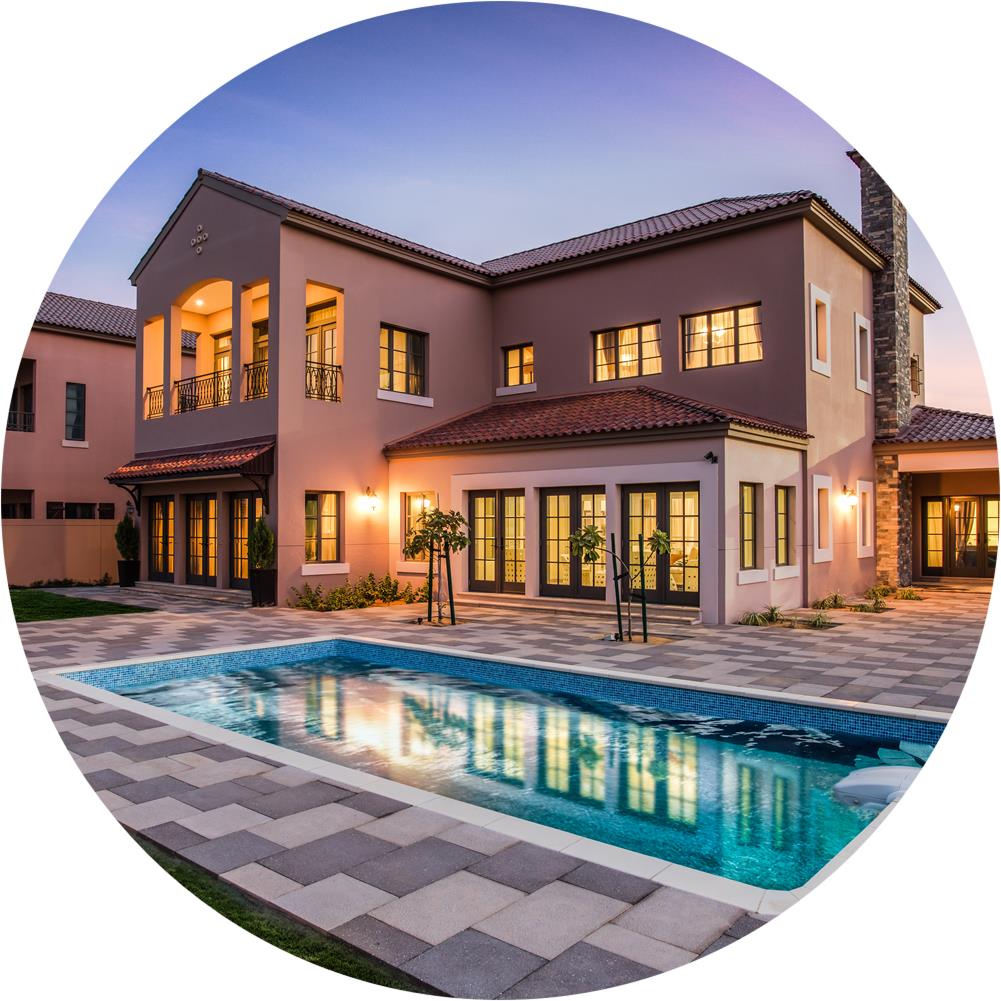
For those seeking the ultimate golfing lifestyle, a number of our Member Venues offer elegant and secluded real-estate opportunities, and our reciprocal membership scheme offers a “home from home” experience for all club members.

A wide range of high quality real estate opportunities are available at our world class venues, from elegant on course villas to beach fronted townhouses and luxury apartments.

Fine & Country Golf

Fine & Country Golf, a specialist division within the multi-award winning real estate agency Fine & Country, markets and sells properties from an exclusive portfolio of the most sought after golfing real estate around the world.
Find Out More