

From tractors to tech
Corey started greenkeeping at 17 in New Zealand. His career has since taken him through the US, Ireland and Fiji to the Middle East, where he has spent almost 15 years.
Over that time, he has watched the job change almost beyond recognition. “I feel like I’m in the middle: between old school and new school,” he said. “I can still remember when we were mowing roughs with tow-behind gangs behind a tractor.
“Today you’ve got electric mowers and robotics – and it’s not just the machinery. It’s all the other tools we use too, from moisture meters to GPS.
“I really like where technology is going. Robotics are here, and they’re improving all the time. They’re not quite where I’d want them to be just yet, but the future is really exciting, and we’re getting ready for it.”
Having introduced electric machinery at the Abu Dhabi venues, Corey’s team is already seeing many benefits similar to those delivered by Husqvarna’s mowers: “It reduces our reliance on fossil fuels, and the other big benefit is noise,” he said. “Our golf courses sit among housing developments, so quieter machines mean we can get the work done more efficiently, at the times that suit us, without disturbing the people who live around the courses.”
Empowering greenkeepers to do their best work
Andrew Lees believes robotics benefit labour optimisation. Corey agrees: “Robotics aren’t here to replace our people. They allow us to redirect their expertise to where they can make the biggest impact on course quality.
“Speaking to clubs in the UK that have already implemented robotic mowers, it’s actually creating a job for someone to manage the robots. They monitor them every day, making sure they’re operating efficiently. It’s not like you just plug them in and away they go.
“There’s still a human element. Like Andrew says, it’s going to make our jobs a little bit easier, but it also means we can focus on more value-added tasks.
“That’s especially true for smaller golf courses without the resources, where it frees up their two or three staff to focus on the detailed work that really lifts the quality of the course.”
Upskill first, invest second
Before any robot arrives, Corey believes the real investment is in knowledge, and he’s already making it.
“I go to the Golf Industry Show (GCSAA) every year, and this year most of my classes were about upskilling myself on robotics.
“It was all about how to start, and the message was: start slowly.
“Most manufacturers will offer a trial, so take it. Put one on the driving range for a month and see how it performs. Whether it’s a mower or a ball picker, the risk is minimal. If it doesn’t work for your operation, you’ve lost nothing. If it does, you’ve got the evidence to start building it into future budgets.
“Our owners are going to ask one day: why have we not got robotics? What are we doing about it? So my job now is to upskill and educate myself, so I can demonstrate to the ownership and our general managers that this is a serious way of investing in the future.”
Delivering tournament-ready conditions year-round
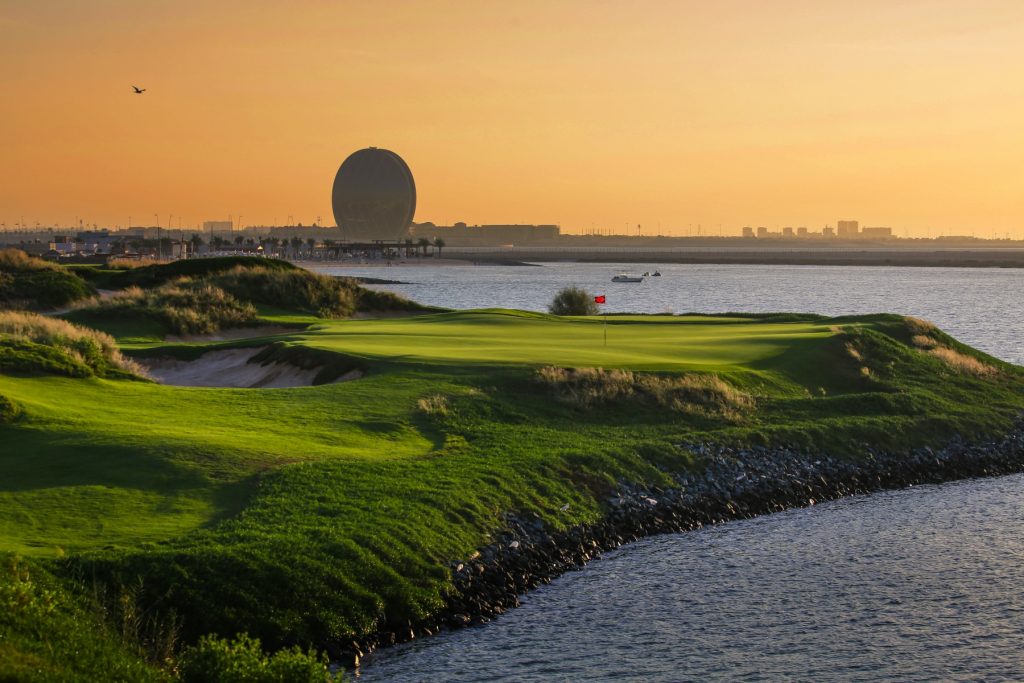
Yas Links, the Middle East’s No.1 course and the region’s first links layout, aims to deliver tournament-ready conditions year-round, and tools such as moisture sensors, GPS mapping and, in time, robotics help make that standard repeatable.
“Our cutting heights barely change for the tournament,” he said. “Everything we do throughout the year is built around producing surfaces that are as firm, tight and linksy as possible. And if we do something, we do it everywhere. Our par-3 course gets exactly the same treatment as the championship course.”
Corey is equally clear that technology is only one part of the picture.
“Greenkeeping is an art and a science, and you need both,” he said. “The technology helps us be more precise and more consistent, but it’s still about doing the basics well. Old Tom Morris was top dressing with sand well over a hundred years ago. What good greenkeeping looks like hasn’t changed. We’re just using more modern equipment to achieve it.”
According to Corey, none of that works without trust from the top.
“Senior management gives me the autonomy to do what I need to do, with the trust that I’ll deliver a tournament-quality golf course for eight or nine months of the year. When you’ve got that backing from ownership, it makes a huge difference.
“Greenkeepers are the experts in this, and when we’re given a say, the whole resort benefits.”
Preparing for the Abu Dhabi Championship
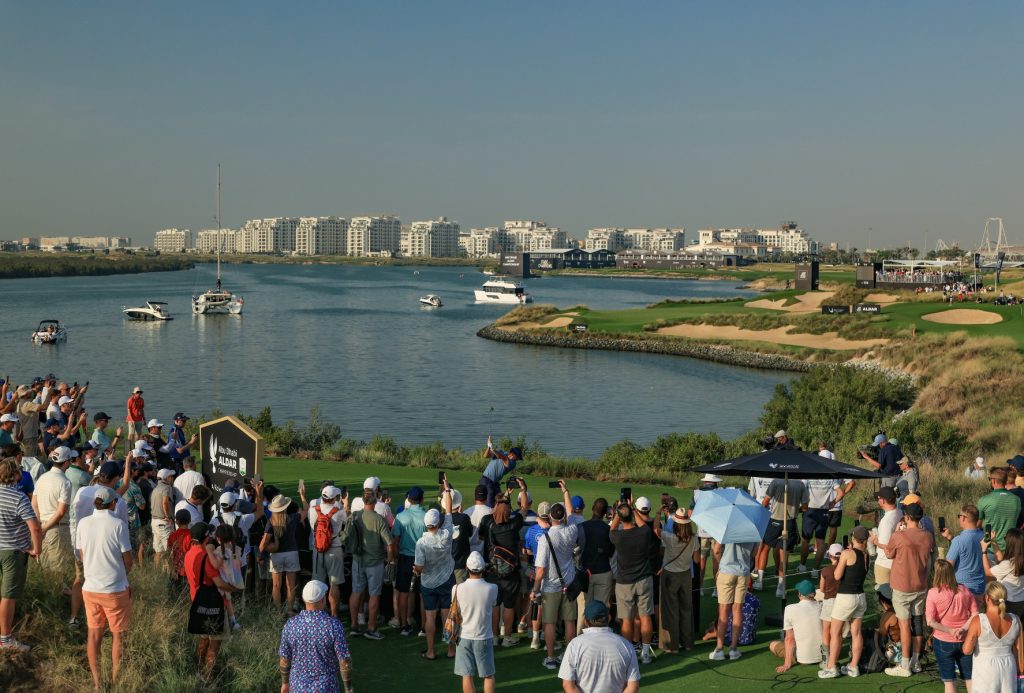
Yas Links was on show to a global audience in November 2026, as Jon Rahm won the Abu Dhabi Aldar Championship, finishing ahead of a field that included Tyrrell Hatton and Rory McIlroy.
So what did it take behind the scenes?
“We’re always chasing firmness and consistency on the greens,” Corey explained. “The original build was 80% silica sand and 20% red dune sand, so now we use the silica for our major summer renovations and dust with the red sand, which is finer. That’s really helped us get the greens rolling exactly how we want them.
“The team also turned some managed grass into native areas and worked with the Tour on a new tee at hole 2. That really lifted the look of the hole and the course as a whole. We’re never standing still. We’re always looking for ways to get better. This year a lot of small improvements have come together, and the team has done an outstanding job to make it happen.
“We’re privileged to host the tournament, but that benefits the golf course all year round, through the winter and into next season.”
Robotics may be the next chapter in turf management, but for Corey the story stays the same: invest in your people, keep the basics consistent and learn early, so that when the technology is ready, your team is too.
Takeaways for network venues
- Robotics and technology: start small, learn early. Begin with one robot on the range, and use industry shows and peers to build your knowledge.
- Labour: redeploy, don’t reduce. Robots handle the routine cutting, so skilled staff can focus on the detailed work.
- Greenkeeping: the basics still matter. Technology makes high standards repeatable, but expertise is what delivers them.
- Investment: build the case early. A month-long trial gives you the evidence to plan robotics into future budgets.
- Working together: trust the experts. Ownership backing and support from operations let greenkeepers deliver their best.