

The project was necessitated by the construction of the new Paris Metro line – aptly named Line 18 – which connects Paris-Orly Airport with Versailles.
We caught up with the man behind the transformation – course architect Russell Talley – to discuss the scale of the project, the importance of a strong design strategy and what golfers can expect when the course reopens in September 2026.
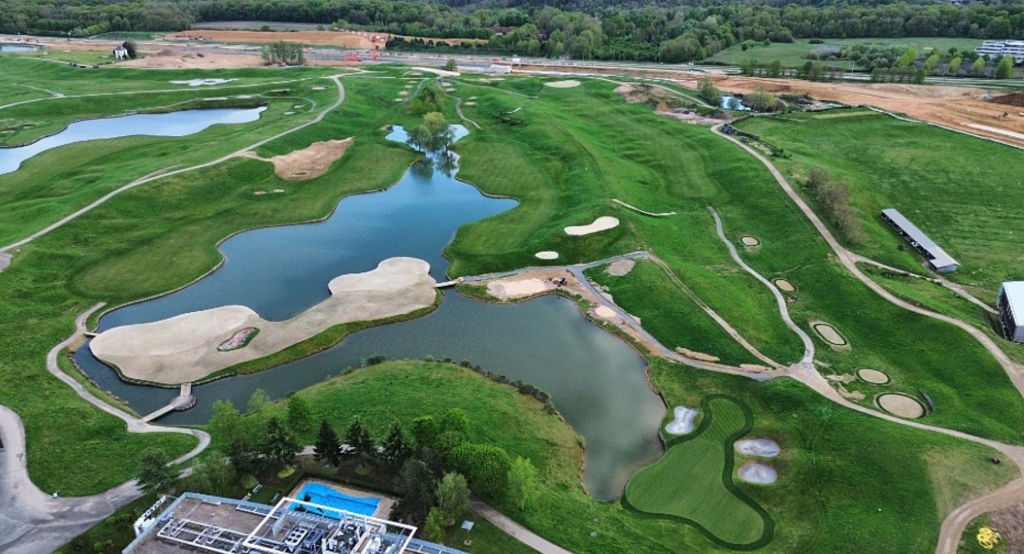
Photo credit: French Golf Federation
Q: How did you come to be involved with the project and what was your reaction?
“It was an honour to be chosen as the golf course architect by the French Golf Federation (FFG),” said Talley. “I worked with this dynamic organisation in 2020. It was the same people involved this time, so we were familiar with each other and how we operated.
“The enormity of the Line 18 earthworks and civil engineering works was truly eye-opening for me at this stage of my long career. But my reaction was the same as with any of my projects: there was a job to do to the highest order.”
Q: What was the biggest challenge of the project?
“The civil engineering impact of Line 18, which affected holes 4, 5, 6, nearly all of the 7-hole Oiselet Course and half of the Stadium Short Game Area of Excellence, presented an unprecedented challenge,” Talley explained.
“The biggest task was not just reacting to the construction, but ensuring the new design created a seamless transition from the remnants of the finished project.
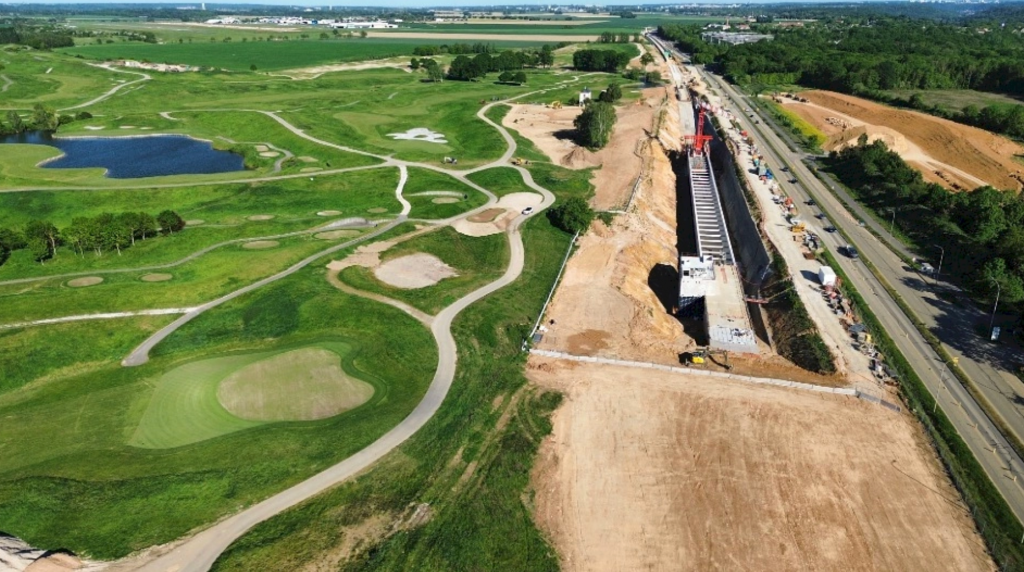
Photo credit: French Golf Federation
“There were many meetings with Société des Grand Projets at the beginning, before the final construction contract was awarded to French engineering group Bouygues. More concrete design details were then drawn up, enabling us to better visualise what the Line’s finished earthworks and levels would be and how we could shape our course redesign.”
Q: Tell us more about the changes to the affected holes?
“Our goal was to enhance the playing experience by introducing more movement and subtle topographical interest, particularly on the greens, through varied slopes and counter-slopes,” said Russell. “This adds strategic depth and a wider variety of pin positions and shot options.
“For example, the new large mound to the right of the new 4th hole – a byproduct of the construction – turned a straight hole into a more engaging dog-leg left. Previously, that part of the course was hardly visited; now it’s a very walkable hole and provides wonderful vantage points over holes 4, 5, and 6.
“For the 5th and 6th, we focused on injecting challenge and interest that the original layout lacked, creating a much more strategic test.
“The club also took the opportunity to make changes and improvements to other parts of the course, while it was closed.”
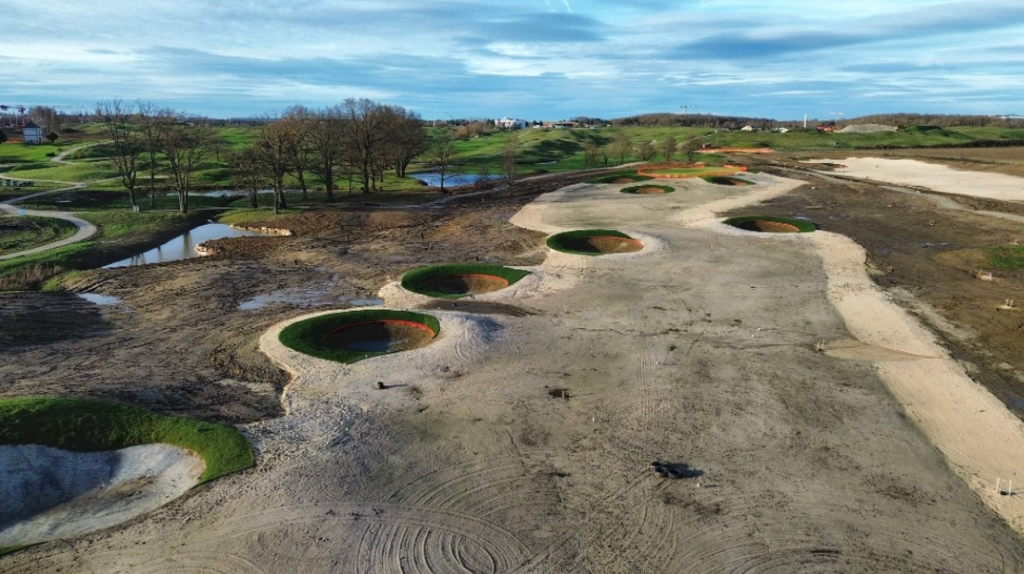
Photo credit: French Golf Federation
Q: How have you balanced it being a good test for professionals and playable for amateurs?
“The Albatros Course has a prestigious history of hosting multiple French Opens, The 2018 Ryder Cup, the 2024 Paris Summer Olympics, so it needed to remain an exacting test for professional golfers,” Talley said. “This was first and foremost in my mind.
“Balancing this with the needs of amateurs wanting to experience the same course as the elite players, while still enjoying a challenge, is a delicate act. I believe we have achieved this with the multi-tee set-up on every hole, which maintains the course’s competitive integrity for the pros, while providing playability and enjoyment for every skill level.”
Q: So what can golfers expect?
“Feedback from a recent members’ tour was very positive, with golfers noting that the redesigned holes feel more intentional and better suited to modern course maintenance standards,” shared Talley.
“The FFG are very pleased with the results as the three holes continue to grow in well for the Open de France in late September, and I too am very pleased with the work. It’s been a very rewarding project.”
As the final touches are applied ahead of the September 1st reopening, excitement is building for the 2026 FedEx Open de France (September 24-27). With a field that includes Ryder Cup stars Tommy Fleetwood and Viktor Hovland, the world’s best will soon be testing Talley’s vision first-hand.